


再開発事業が描く未来都市とは?
都市の再開発は、老朽化した建物やインフラを刷新し、より効率的で快適な都市空間を創出するための取り組みです。
高層ビル、商業施設、公共空間が一体となった「未来都市」の創出には、利便性と資産価値の向上に加え、複合災害に対する強靭性の確保も重要なテーマとなっています。
再開発事業は長期戦
大きなプロジェクトは短期間では完成できません。国土交通省の事業期間の推移資料によれば概ね6年から9年程度の期間を要していることが分かります。
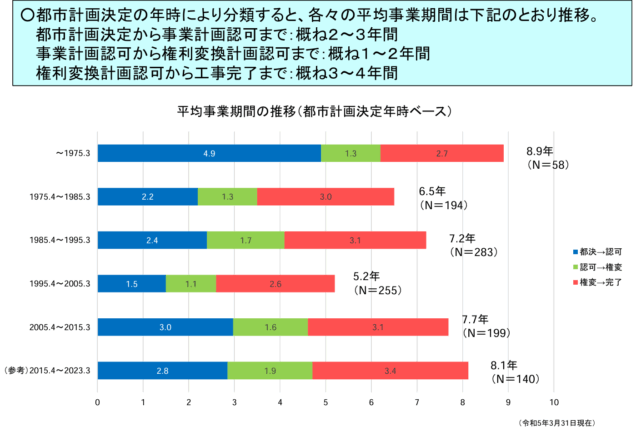
(出典:国土交通省)
実際に、東京都港区六本木エリアにおける過去の第一種市街地再開発事業の計画から実績をみてみました。
すると、以下の通り大規模プロジェクトの都市計画決定から工事完了までに少なくとも約8年程度の年月を要することが分かります。
| 地区名 | 面積 | 都市計画決定 | 権利変換期日 | 工事着工 | 完了 |
| 赤坂・六本木(アークヒルズ) | 5.6ha | 昭和54年11月 | 昭和58年8月 | 昭和58年11月 | 昭和61年 |
| 六本木一丁目西(泉ガーデンタワー) | 3.2ha | 平成6年4月 | 平成10年4月 | 平成11年6月 | 平成14年 |
| 六本木六丁目(六本木ヒルズ) | 11.0ha | 平成7年4月 | 平成12年2月 | 平成12年4月 | 平成15年 |
第一種市街地再開発事業の過程では、従前建物・土地所有者等は、従前資産の評価に見合う再開発ビルの床(権利床)を受け取る権利があります。この「権利変換」を経て、所有することとなります。
また、土地の高度利用により創出される新たな床(保留床)を外部の新しい居住者やディベロッパー等事業者へ売却処分することにより、事業に必要な資金をまかないます。
もちろん「権利変換」を望まない場合もあります。この場合には、期日までに申し出ることで価額相当の金銭の給付を受け、地区外に転出することも可能です(地区外転出)。
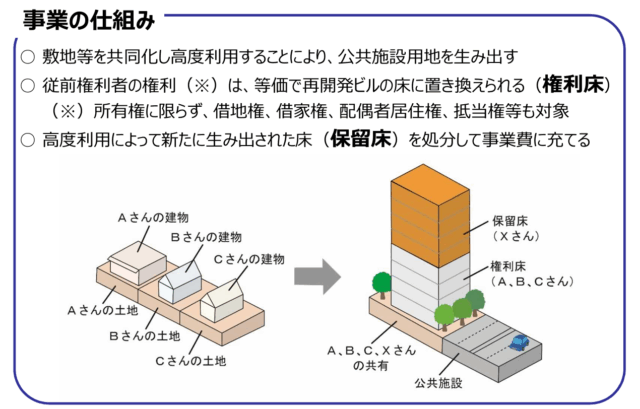
(出典:国土交通省「市街地再開発事業の税制優遇措置について(概要パンフレット)より抜粋)
まちづくりは、長い年月をかけて少しずつ進化していきますが、この段階に応じた資産価値に対する「税」の側面も移り変わります。
相続税:再開発の進行度で評価額が変わる
再開発事業に指定された土地の評価:
- 初期段階(従前地):再開発前の土地評価額は、相続税路線価に基づき、通常の宅地と同様に評価します。
- 中期段階(仮換地):仮換地が指定されると、使用収益権の有無及び造成工事の状況により評価方法が変わります。また、清算金が見込まれる場合には考慮されます。
- 後期段階(換地):新たな土地・建物が確定し、換地処分後は、一般の宅地と同様に評価します。
再開発事業の建物の評価(権利評価額):
- 権利変換価額のうち建物部分の価額×70%(工事完了まで1年超の場合さらに5%控除)
長期に及ぶ開発期間の中で、いつ相続が発生するかはコントロールできることではありませんが、相続税の評価上は、再開発事業の段階に応じて評価方法が異なることとなります。結果として相続発生時の状況が相続税額に直結するため、事業スケジュールの把握が重要になります。
資産保有者が考えるべきこと
未来都市の恩恵を受ける一方で、資産保有者は以下の視点を持つことが重要です:
- 相続税評価のタイミング管理:相続が発生する時期によって評価方法が異なるため、事業進捗と照らし合わせた対策が必要。
- 貸付事業の再開による特例活用:再開発で中断した貸付事業を再開することで、小規模宅地の特例が適用される可能性もあるため、事前の確認が重要です。
- 固定資産税の軽減措置の確認:権利床の用途や取得方法によって、税制優遇が受けられるかをチェックしましょう。
再開発事業は都市の未来を形づくります。未来都市のゆくえを見据えながら、生きている間にあとどれだけの魅力的な都市を感じることができるのか・・・今後の再開発事業も楽しみです。
What Kind of Future City Does Redevelopment Envision?
Urban redevelopment is an initiative to renew aging buildings and infrastructure, creating more efficient and comfortable urban spaces.
The creation of a “future city,” where high-rise buildings, commercial facilities, and public spaces are integrated, involves not only improving convenience and asset value but also ensuring resilience against complex disasters as a critical theme.
Redevelopment Projects Are a Long-Term Endeavor
Naturally, large-scale projects cannot be completed in a short period. According to data from the Ministry of Land, Infrastructure, Transport and Tourism, such projects typically require about six to nine years.
Looking at past Type I Urban Redevelopment Projects in the Roppongi area of Minato Ward, Tokyo, we can see that large-scale projects take at least around eight years from the decision of the city plan to the completion of construction.
| District Name | Area | City Planning Decision | Date of Rights Conversion | Construction Start | Completion |
| Akasaka–Roppongi (Ark Hills) | 5.6 ha | Nov. 1979 | Aug. 1983 | Nov. 1983 | 1986 |
| Roppongi 1-Chome West (Izumi Garden Tower) | 3.2 ha | Apr. 1994 | Apr. 1998 | Jun. 1999 | 2002 |
| Roppongi 6-Chome (Roppongi Hills) | 11.0 ha | Apr. 1995 | Feb. 2000 | Apr. 2000 | 2003 |
In the process of a Type I Urban Redevelopment Project, former building and landowners have the right to receive redevelopment building floor space (rights floor) equivalent to the value of their previous assets. Through this “rights conversion,” they become owners of the new property.
Additionally, newly created floor space (reserved floor) resulting from intensive land use is sold to new residents or developers to secure the funds necessary for the project.
Of course, some may not wish to undergo “rights conversion.” In such cases, by applying before the deadline, they can receive monetary compensation equivalent to the value and relocate outside the district (external relocation).
Tax Perspectives Shift Alongside Redevelopment Progress
City-building evolves gradually over many years, and the tax aspects of asset value change accordingly.
Inheritance Tax: Valuation Varies by Redevelopment Stage
Land valuation in redevelopment projects:
- Initial stage (pre-redevelopment land): Land is valued based on inheritance tax road prices, the same as ordinary residential land.
- Intermediate stage (provisional land): Once provisional land is designated, valuation methods vary depending on usage rights and construction status. Expected settlement payments are also considered.
- Final stage (land readjustment): After new land and buildings are finalized, valuation is conducted as with ordinary residential land.
Building valuation in redevelopment projects (rights valuation):
- Building portion of rights conversion value × 70%
- If construction takes more than one year to complete, an additional 5% deduction applies.
Since the timing of inheritance cannot be controlled during the long development period, inheritance tax valuation differs depending on the stage of redevelopment. As a result, the situation at the time of inheritance directly impacts the tax amount, making it essential to understand the project schedule.
Key Considerations for Asset Holders
While enjoying the benefits of future cities, asset holders should keep the following perspectives in mind:
- Managing inheritance tax timing: Because valuation methods differ depending on when inheritance occurs, countermeasures aligned with project progress are necessary.
- Utilizing special provisions through resumption of lending businesses: Restarting lending businesses interrupted by redevelopment may allow application of small residential land tax benefits, so prior confirmation is crucial.
- Checking property tax reduction measures: Depending on the use and acquisition method of rights floor, tax incentives may apply.
Redevelopment projects shape the future of cities. As we look ahead to the trajectory of these future cities, it is exciting to imagine how many more attractive urban spaces we will be able to experience in our lifetimes.